
Lansei: Custodians of Imperial Silk Artistry
In an era dominated by rapid automation and fleeting trends, Lansei stands as an intentional sanctuary for China’s Intangible Cultural Heritage (ICH). Tucked away in their creative studio in Chengdu, the Lansei collective does not merely produce craft supplies; they preserve ancient textile languages that have passed through human hands for over a thousand years.
To look closely at a piece of Lansei artwork is to observe a masterclass in patience, where raw mulberry silk, metallic wires, and centuries of history are transformed into living art.
The Heart of Lansei: Master Artisans as Lifelong Students
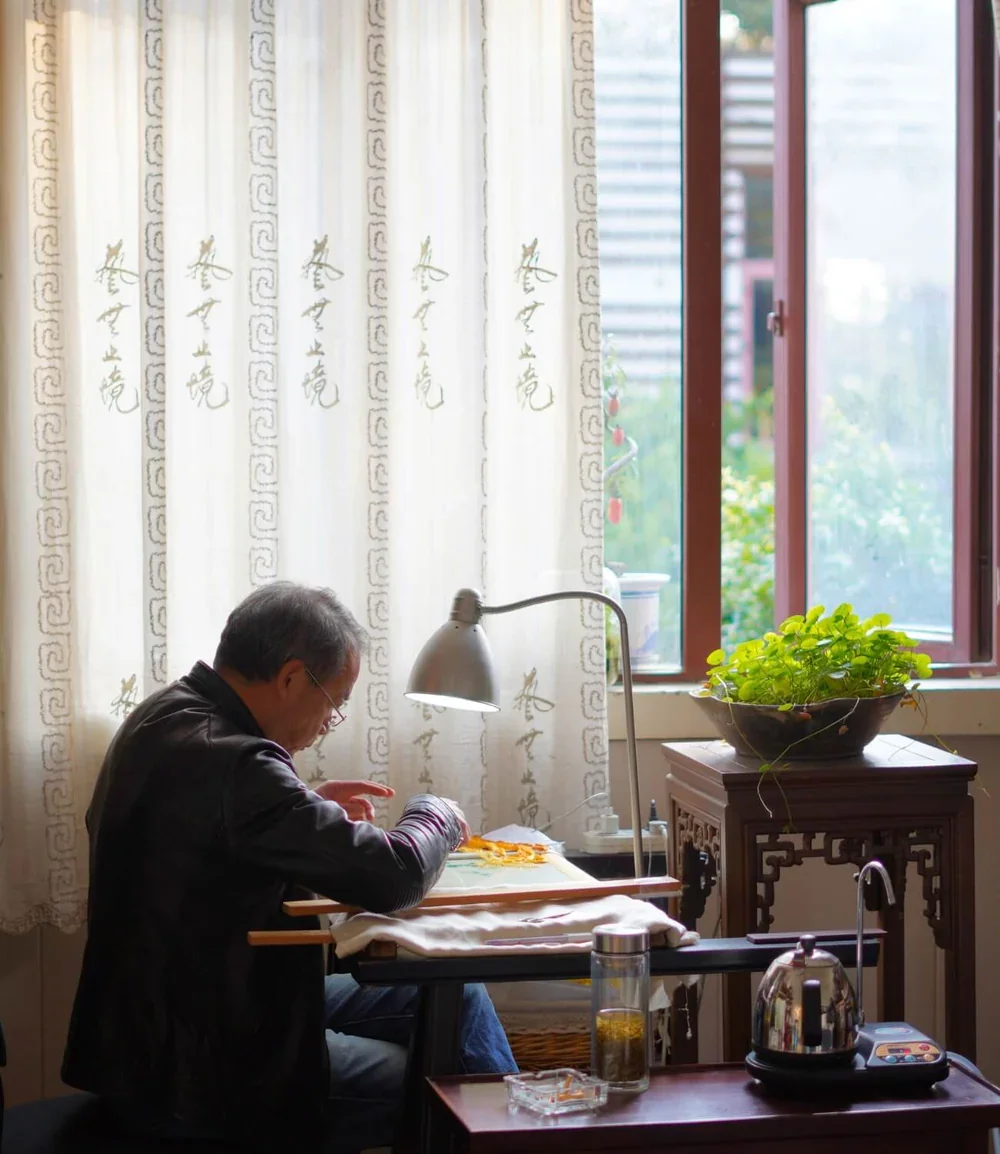
The heartbeat of Lansei resides in its dedicated collective of master artisans, who collaborate closely with legends of the craft—such as Master Wu Xueqiang, a nationally acclaimed master with over four decades of expertise in historic Shu embroidery. These creators have spent lifetimes refining a single physical movement: splitting a raw silk strand down to an impossible fraction of its width or brushing out velvet fibers to a flawless cushion.
Yet, despite their global acclaim, the masters at Lansei reject the rigid title of "expert." Within the studio, they proudly class themselves as perpetual students of the craft.
"The silk has a temper and a soul," the masters say. "Even after decades, every new bundle of raw mulberry floss teaches you something new about tension, moisture, and light. We are always learning from the material."
This profound humility ensures that every tool kit, video masterclass, and raw material bundle dispatched from their studio carries the weight of authentic, living lineage—completely untainted by artificial shortcuts or machine patterns.
1. Ronghua (Silk Velvet Flowers)
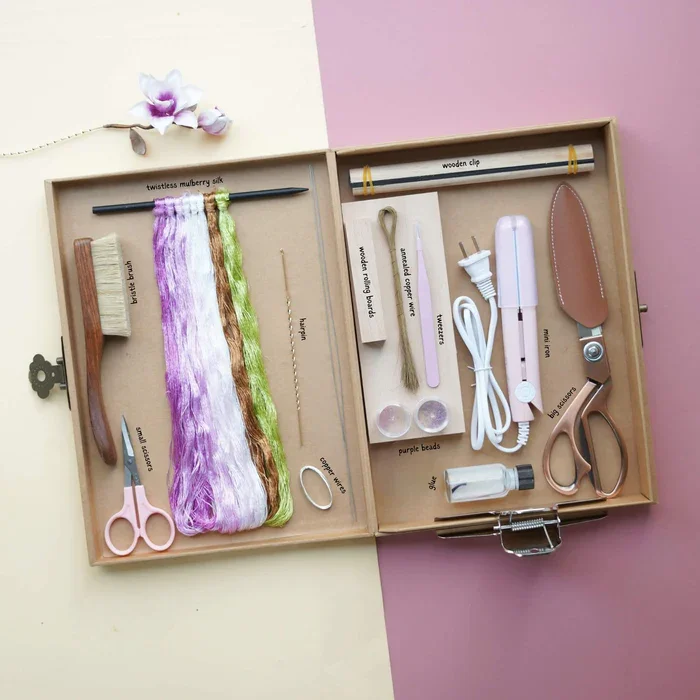
Dating back to the Tang Dynasty, Ronghua was once an exclusive luxury reserved solely for the imperial court. It requires an extraordinary, high-stakes process: raw mulberry silk is painstakingly combed, clamped tightly between twisted brass wires on a traditional rolling board, and then sliced open to reveal a plush, dense velvet texture.

The signature magic happens during the trimming stage. Using specialized tapering shears, the artisan rotates the silk with one hand while sculpting the excess velvet with the other to create flawless, geometric petals, wildlife forms, and ornate hair accessories that ripple delicately with the air.
The Two Pillars of Lansei Heritage
Lansei’s studio is highly specialized across two distinct branches of Imperial Chinese textile art, allowing you to trace the threads of history across completely different tactile forms.
2. Regional Silk Painting (Su and Shu Embroidery)
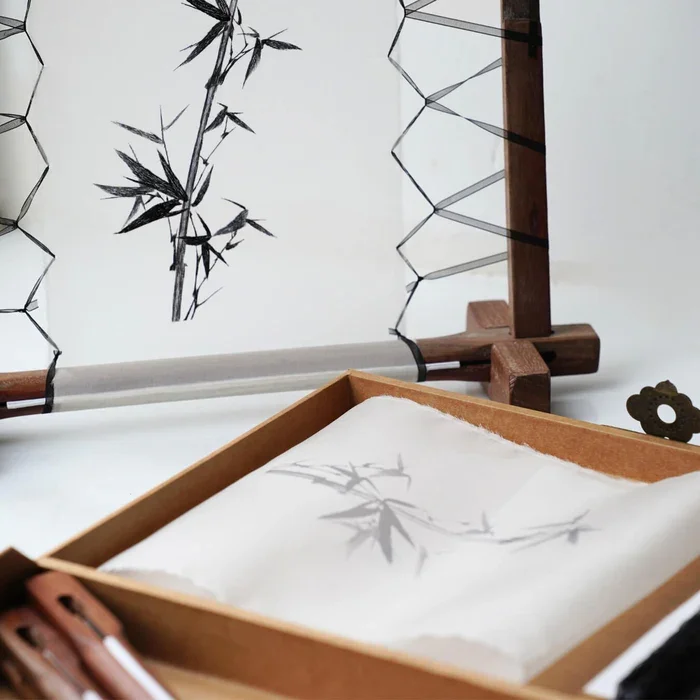
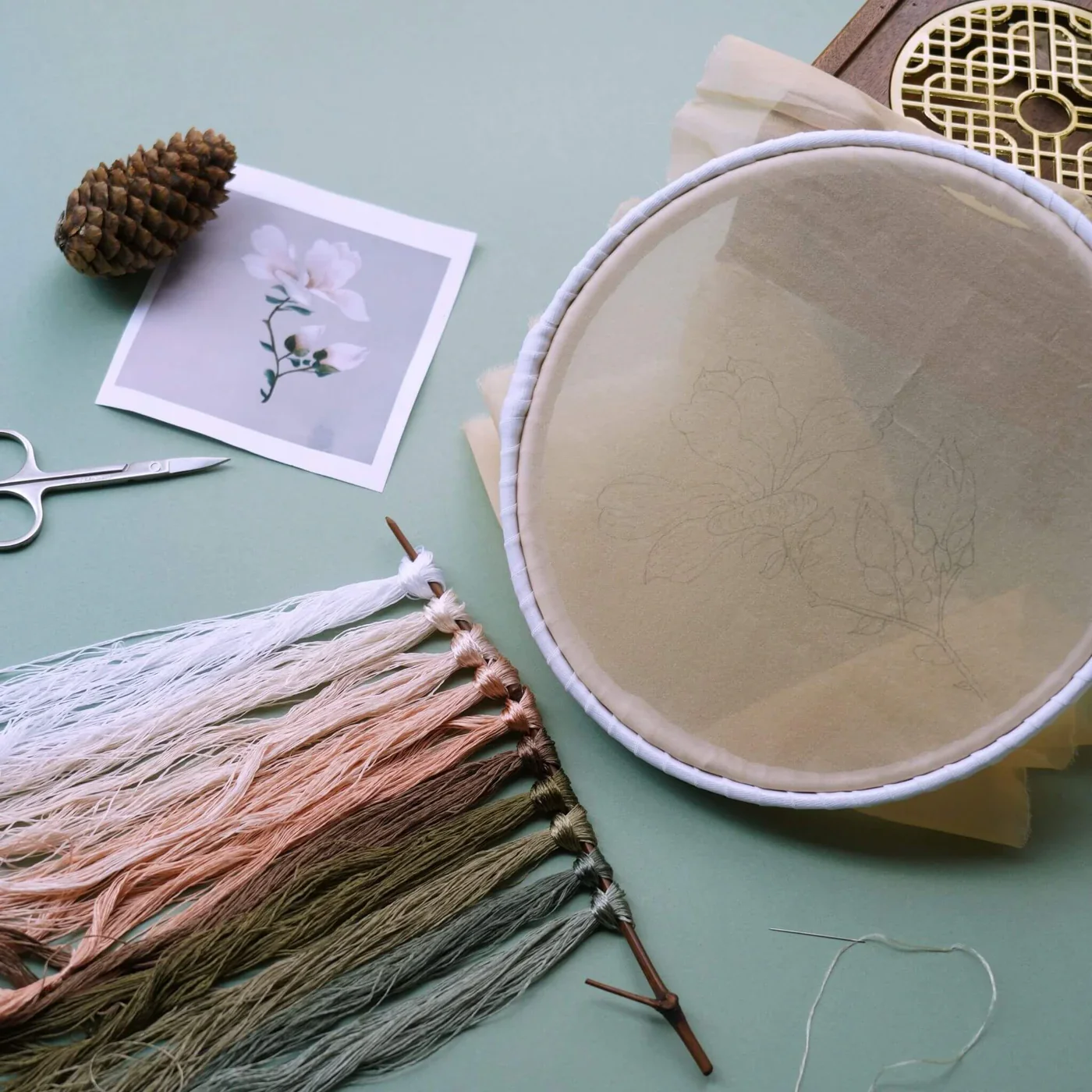
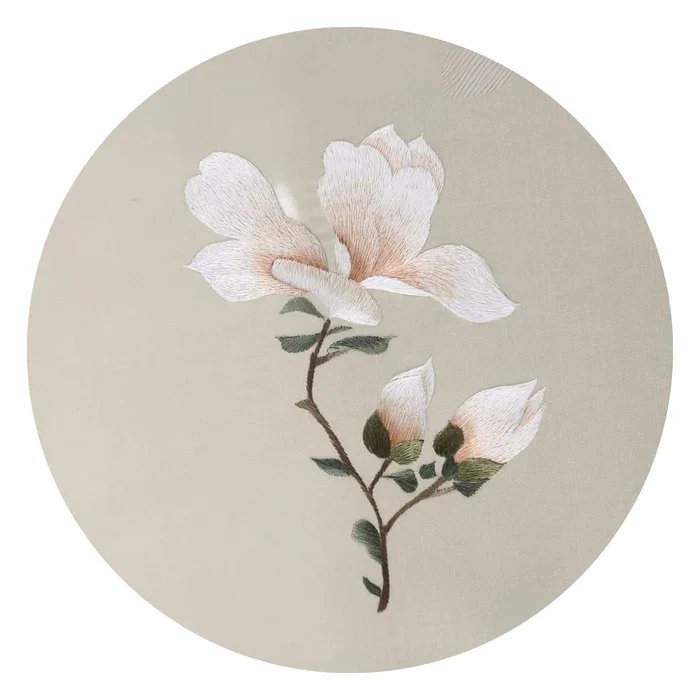
Beyond three-dimensional flowers, Lansei curates extraordinary kits representing China's core historic embroidery schools. Under the guidance of master studios, these heritage kits introduce makers to the art of Split Threading—where a single strand of mulberry silk is meticulously split into 16 or 32 microscopic filaments.
Using traditional wood embroidery looms, stitchers learn historic blending stitches ($晕针$) and random stitches ($乱针$) to recreate fluid watercolor gradations and lifelike textures that look exactly like fine ink paintings.
🌿 Embracing the Mindful Stitch
Lansei believes that these ancient crafts are not a test of speed, but a quiet, rhythmic meditation. By providing jewelry-grade materials, custom-designed bamboo rolling blocks, and patient, step-by-step masterclasses, they invite makers worldwide to slow down, listen to the thread, and participate in keeping a beautiful, living heritage alive.